| Audience | Data teams, platform admins |
| Prerequisites | The Configure Agents grant |
Tell agents what's true about your business and how to behave. You add durable knowledge as context, package reusable practices as skills, let agents save what they learn as memories, set what they research with signals, and review the library to keep it consistent.
In the app, these all live under Context Hub → Context.
What you'll learn
- Add business definitions and rules as context
- Package reusable practices as skills
- Save learnings as memories
- Set what agents research with signals
- Review your context to keep it consistent
Add business context
Add business context when an agent needs a definition or rule it can't infer from your schema — how you define a metric, which source wins when two disagree, which records to leave out. Each piece is short, and the agent reads it when it's relevant to a task.
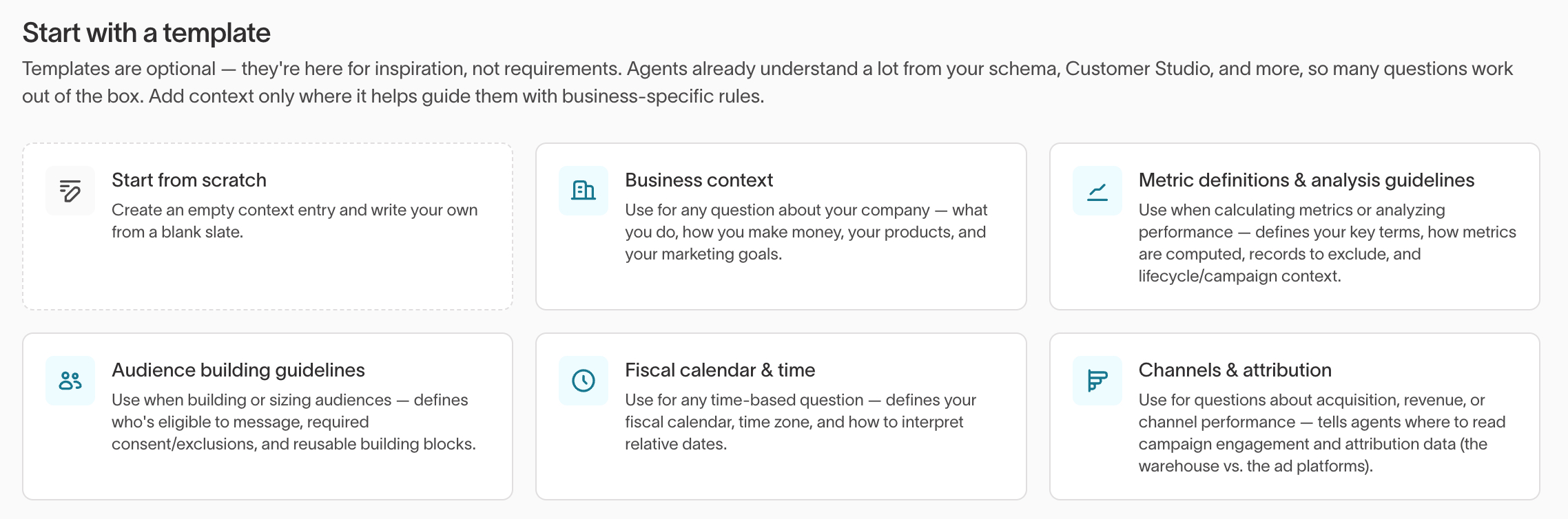
Go to Context Hub → Context and select Add context. You can start from a template or from a blank item. Templates are optional starting points, not requirements — agents already understand a lot from your schema and Customer Studio, so add context only where you need to guide them with business-specific rules.
The templates cover the most common kinds of context:
- Business context — What your company does, how it makes money, your products, and your marketing goals.
- Metric definitions & analysis guidelines — Your key terms, how metrics are computed, which records to exclude, and lifecycle or campaign context.
- Audience building guidelines — Who's eligible to message, required consent and exclusions, and reusable building blocks.
- Fiscal calendar & time — Your fiscal calendar, time zone, and how to read relative dates.
- Channels & attribution — Where agents read campaign and attribution data, such as your warehouse versus the ad platforms.
Or select Start from scratch to write your own.
Write a context item the agent can act on
State the rule so a reader could apply it without guessing. Include the metric or term, the authoritative source, the formula or filters, what to exclude, and what to do when two sources disagree. For example:
Use the marketing_conversions model for completed purchases. Use the Meta connection
for spend, impressions, and clicks. Calculate ROAS as completed-purchase revenue
divided by spend. If the two sources disagree, show both values and explain the difference.
Set who uses each item
Two controls decide where a context item applies:
- Agent scope — Route the item to the product that needs it, or leave it on All agents to apply everywhere.
- Brand profile — Scope the item to one brand, or leave it on all profiles.
Give each item a description that says when it applies. The agent reads the description to decide whether to pull the item into a task, so a specific description ("Use when calculating paid-media efficiency") reaches the right tasks and skips the rest.
Package reusable practices as skills
Create a skill when you want an agent to follow the same process every time it performs a task. If you find yourself giving the same instructions on every request, turn those instructions into a skill.
For example, you might create a skill for how to write a weekly performance report, how to photograph products in a lifestyle scene, or how to review generated copy before publishing.
To add a skill, go to Context Hub → Context → Skills and select Add skill:
- Name it for the practice it covers.
- In Description, describe the tasks the skill applies to. The agent uses this to pull the skill in when it's relevant and ignore it when it isn't.
- Write the Content the way you'd brief a new teammate. Use the editor, paste source, or upload a file.
- Set the Agent scope, and a Brand profile if the practice is brand-specific.
- Turn the skill Active.
Hightouch ships some skills as managed defaults, marked Managed by Hightouch. You can turn these on or off for your workspace instead of writing them yourself.
Save learnings as memories
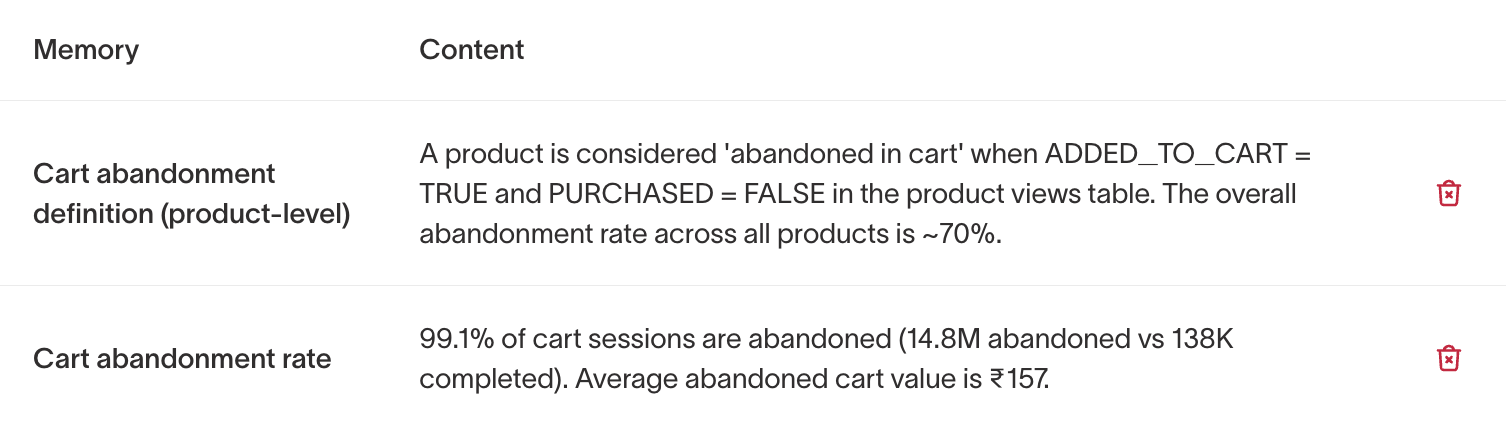
As an agent works through a chat, it shows the assumptions it's making — how it defined a term, which table it used. When an assumption is correct and worth reusing, save it as a memory so future chats start from the same definition.
You create memories two ways:
- From a chat — Save an assumption the agent surfaced during a conversation.
- By asking — Tell the agent to create memories from a file or a definition, then save the ones you want.
Each memory has a scope:
- Workspace — Applies across all agents and chats.
- Parent model — Applies only to a specific parent model.
Manage memories under Context Hub → Context → Memories. Update or remove a memory when the underlying data or rule changes — a stale memory misleads every chat that follows.
Configure research signals
Configure signals when you want agents to research trends, competitor moves, and industry news. You set the sources they search and the topics they focus on. Ad Studio uses this configuration: the results appear in Ad Studio Insights and in the scheduled Signals report.
Signals has two parts:
- Research sources — The platforms the agent searches. Turn on the built-in sources you want, or select Add source to add your own.
- Topics — The categories that focus the research, grouped into Industry, My brand, Competitors, and Cultural. Select + in a category to add a topic, or add your own category.
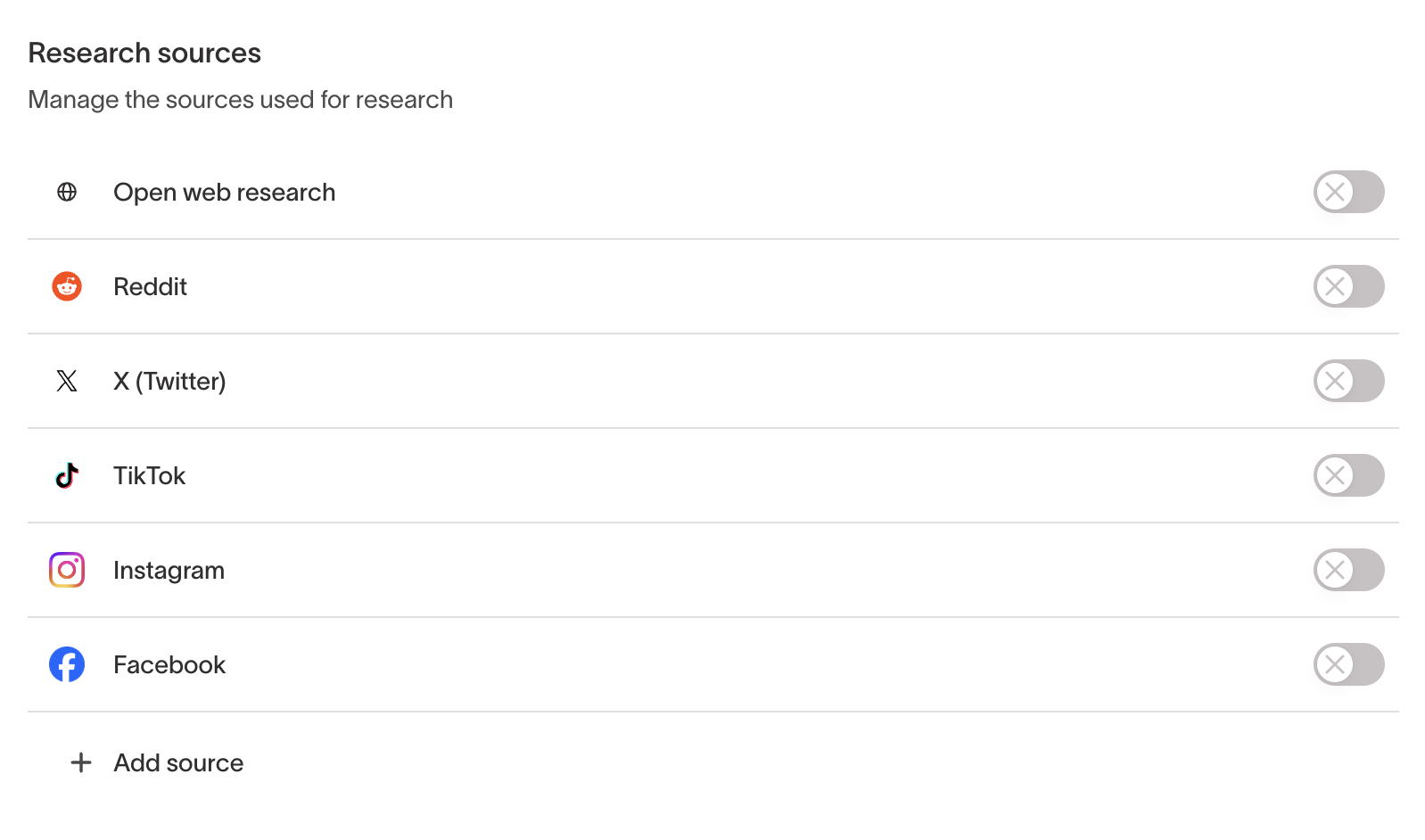
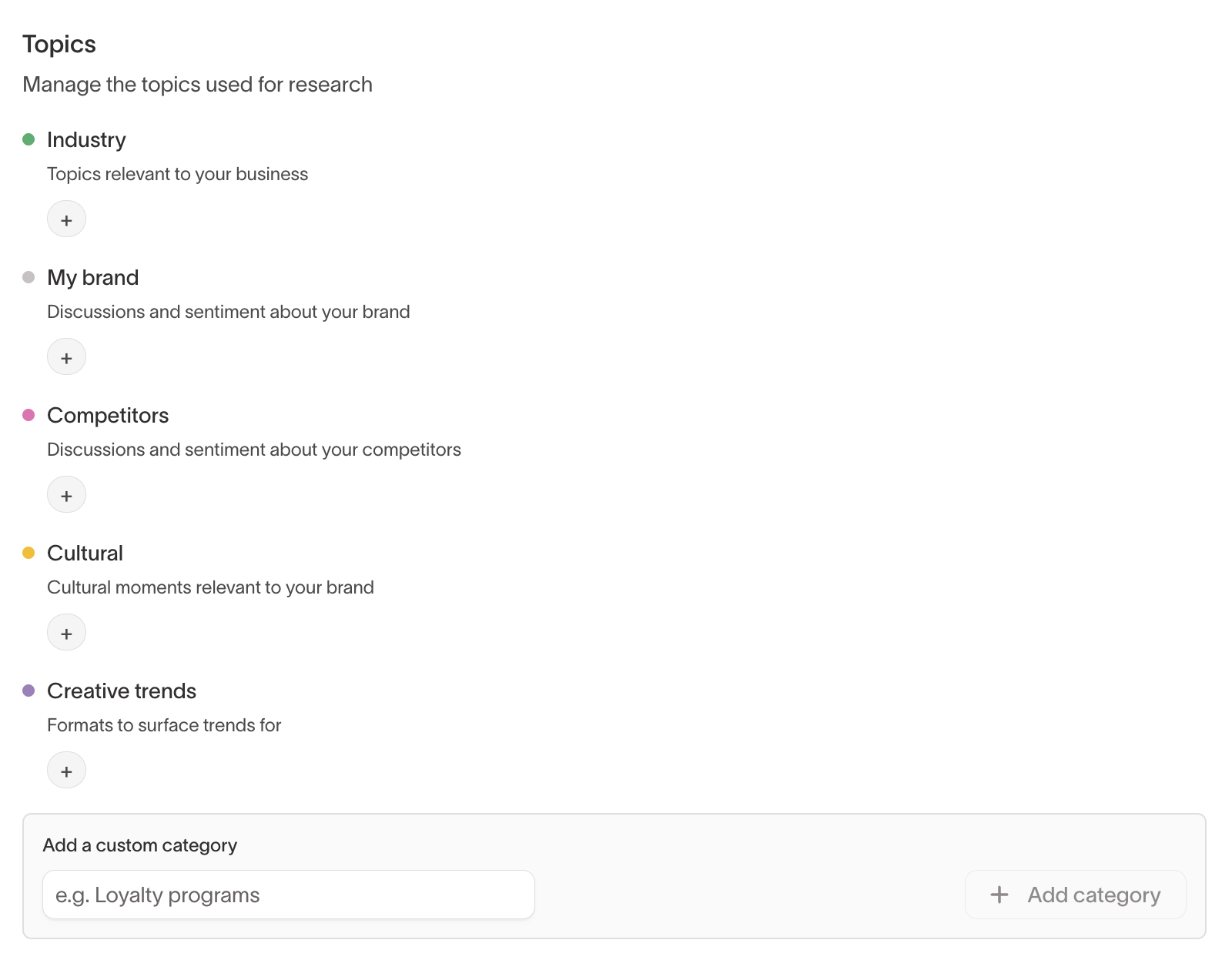
Signals configuration decides what the agent researches. To see the results, go to Ad Studio → Insights → Signals.
Keep your context healthy
As your library grows, definitions drift and start to contradict each other. A context review has the agent read your whole library and flag problems, so you don't have to audit it by hand.
Go to Context Hub → Context → Review and select Run context review. The agent checks for:
- Contradictions between items
- Redundant or duplicate items
- Gaps where guidance is missing
- Unclear items that need a better description
- Stale items that no longer match your data
When the review finishes, it returns:
- A summary of what it found.
- Suggested edits — renamed, rewritten, or reformatted items, and items to remove. Accept or reject each one.
- Questions — decisions only you can make, such as which of two conflicting definitions should win. Answer or dismiss each one.
- Tips — smaller cleanup suggestions for items the review can't change on its own.
Open a past review from the history, or select Chat with agent to work through the findings in a conversation.
Next steps
- Set content and creative rules for Ad Studio and Lifecycle Studio.
- Set up your context for your first workflow.